 11
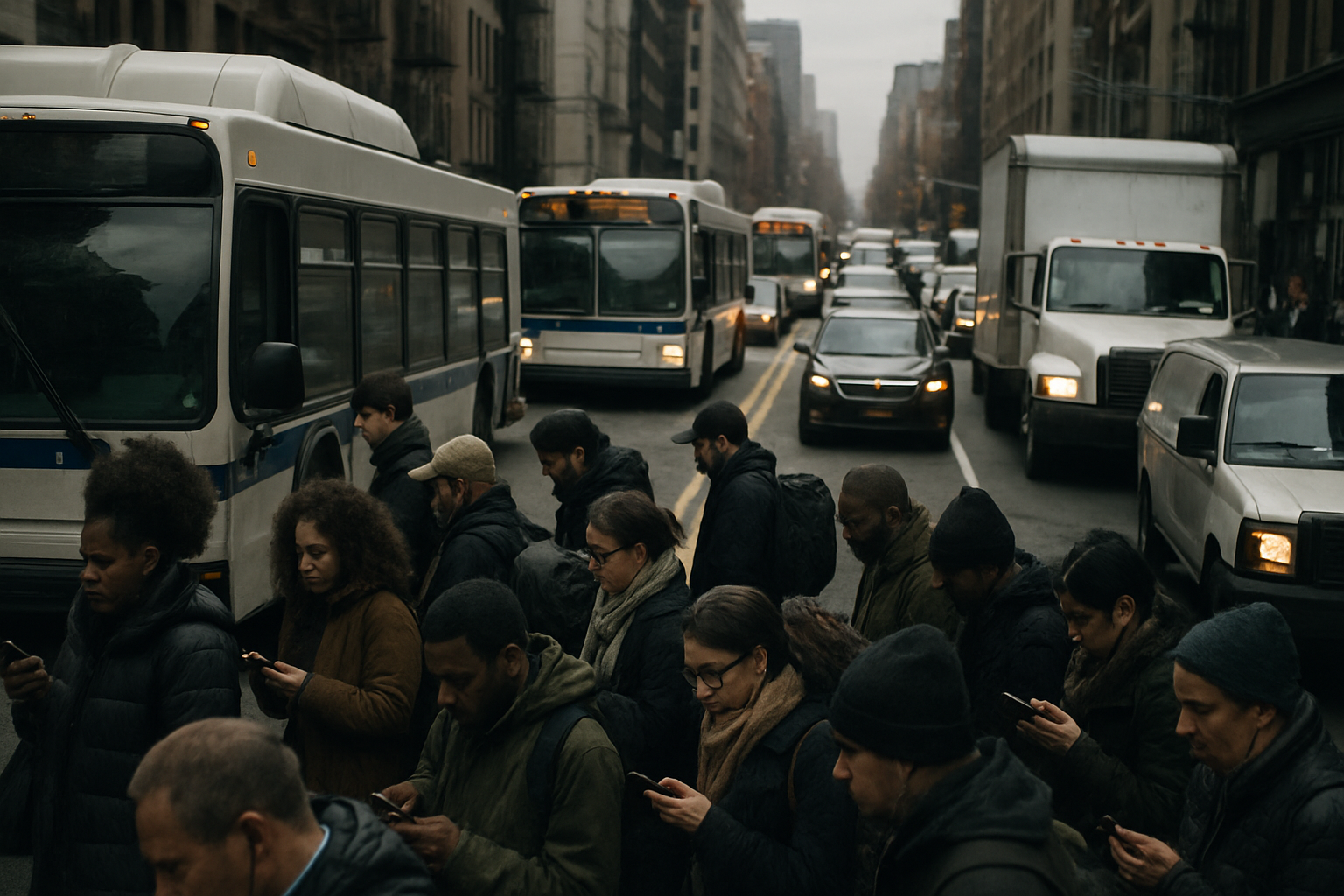
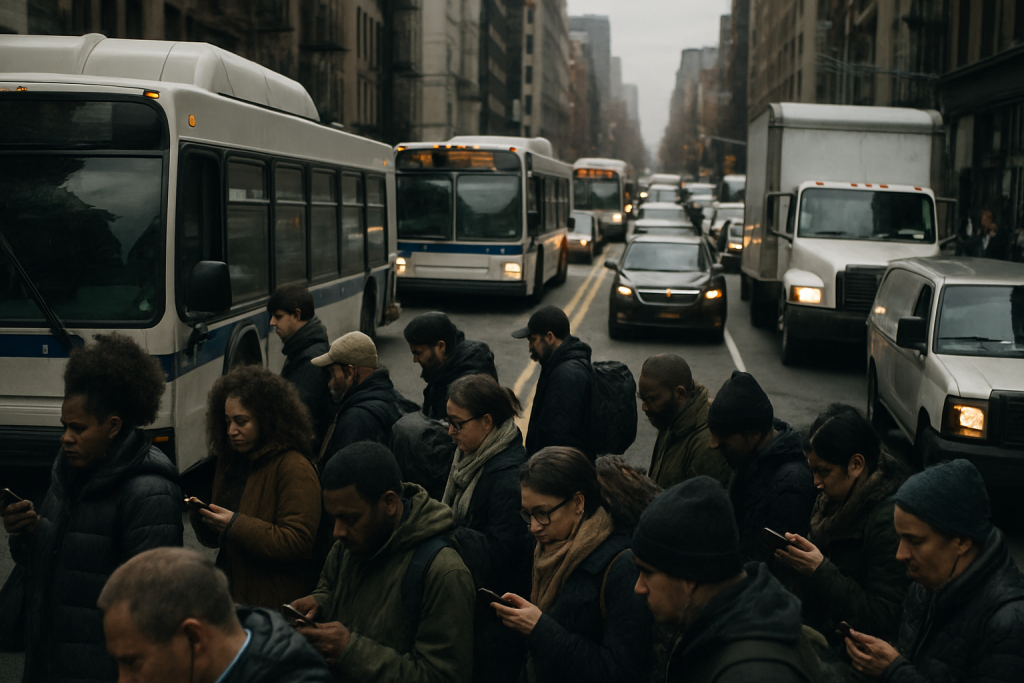
The woman at the stop on Flatbush had already checked two apps and the clock above the laundromat. The screen at the shelter said the bus was “2 minutes away” for a solid 11 minutes. By the time the 41 finally lurched up, it was too full to take everyone; drivers waved, mouths forming the same apology: “Next one.”
Every rider in the city has some version of this story. Less visible is the system of schedules, signals, and budget lines that makes that bus late in the first place—and sometimes right on time.
Transit officials love a metric called on‑time performance, usually defined as a bus or train arriving within a few minutes of the schedule. Riders describe it more simply: “Can I trust this thing?”
Trust has been slipping. Even in cities where total ridership has not fully recovered from the early-pandemic collapse, buses and trains often feel more crowded and less predictable. Schedules were trimmed when offices emptied out. Traffic came roaring back before service did. Freight delays and staffing shortages stretched rail timelines. Weather extremes pushed vulnerable equipment over the edge.
The result: a kind of reliability recession. Not always catastrophic, rarely front-page material, but present in the background of work shifts, daycare pickups, medical appointments, and hourly wages.
When a bus run “drops”—no driver to cover the trip, vehicle out of service, dispatch reassigning a coach to another line—there is no flashing red alert. The app may show a phantom bus that never appears, or simply a widening gap between arrivals. Riders just stand there, recalculating how late they will be.
Transit planners often talk about average speed. Riders live their lives in waits and transfers. The hinge point is the time between “I walked out my front door” and “I saw the bus actually arrive.”
In many neighborhoods, that hinge is widening. Schedules written for one set of conditions meet a very different street reality:
– Traffic volumes rebound faster than anticipated. – Construction narrows lanes and removes bus stops temporarily—sometimes for months. – Double-parked delivery trucks squeeze buses into single-file traffic. – Left turns and uncoordinated signals force buses to crawl from light to light.
Adding two or three minutes to a segment does not sound dramatic until it multiplies across a line. A route scheduled at 45 minutes end to end can quietly become a 60‑minute slog in real traffic. The schedule stays on paper. The unreliability lands on the sidewalk.
At the household level, this plays out in small but relentless ways. A rider who used to leave home at 7:30 to make an 8 o’clock shift now has to leave at 7:15 “just in case.” A parent aiming for the 3:10 bus to pick up a child by 3:30 starts gambling on a 2:50. People build buffer time into already-cramped days, or they eat the risk.
Riders with options often move to cars or ride-hail when reliability collapses. Riders without options start turning down job offers that simply do not line up with the system they have.
The schedule on the bus stop is not a law of nature. It is a compromise.
Transit agencies typically revise bus and rail timetables a few times a year. Planners pour over data from onboard GPS units, automatic passenger counters, radio logs, and—more recently—crowdsourced feedback from rider apps. They identify where buses are routinely late, where they arrive bunched together, which trips are chronically overcrowded, which runs carry air.
On one side of the ledger: the travel times that riders and drivers actually experience. On the other: the budget for operators and vehicles.
There is a temptation baked into the process. Overly generous schedules—padding in extra time for traffic that only materializes on the worst days—can be expensive. A bus that reaches a time point early has to sit and wait so it does not leave riders behind, which feels inefficient. But schedules that are too tight are far more punishing for riders, especially at the ends of lines and in the late evening.
Some agencies have historically chosen “optimistic” running times to make productivity numbers look better and to claim higher on‑time performance on paper. The buses are called on time if they match the schedule, but the schedule is impossible under normal traffic.
In recent years, more systems have begun recalibrating: slowing official schedules to match reality, then carving back travel time not by wishful thinking but by changing street design and traffic rules.
That is the quiet battlefield over on-time transit.
Walk down a major bus corridor at rush hour and the central conflict reveals itself in metal and paint: travel lanes full, curb lanes clogged, horns stretching in both directions.
Most streets still prioritize private car storage over bus movement. Sidewalk to sidewalk, the curb lane is often metered or free parking; the bus weaves in and out of it, merging back into traffic whenever a loading van, rideshare pickup, or delivery truck blocks the stop.
Under these conditions, a “frequent” bus route can deteriorate into a line of vehicles stuck in the same queue as everyone else. Three buses can arrive at once, followed by a 25‑minute gap. From a rider’s perspective, the route is broken.
Solutions exist, and they are not exotic:
– Dedicated bus lanes enforced by cameras rather than sporadic police patrols. – Bus bulbs and in-lane stops so coaches are not forced to pull in and out of traffic. – All-door boarding to shrink time at stops. – Transit-priority traffic signals that give buses a head start at intersections.
Each of these chips away at delay, smoothing out the line. Each also touches politically sensitive territory: parking removal, turn restrictions, automated enforcement. For small-business owners watching margins, losing a few curb spaces can feel like a direct threat. For residents circling for parking on side streets, a red-painted bus lane reads as a permanent loss.
On paper, the trade-off is stark. A curb lane used for parking serves perhaps a dozen drivers over the course of an hour. The same lane used for a functional bus route can move hundreds of riders in the same space. The benefits are diffuse; the pain is concentrated. Public meetings reflect that imbalance loudly.
In cities that have pushed through those fights, the payoff is usually visible within weeks: buses getting through when traffic seizes up, arrival times tightening around the schedule instead of floating away from it.
Schedules can fix bottlenecks on paper; actual operators move the buses and trains.
Many transit agencies are struggling to hire and retain enough drivers and rail operators to cover all scheduled service. Training pipelines are long. Pay and benefits have not always kept pace with alternative jobs that do not involve split shifts, late-night runs, or constant exposure to stressed passengers.
When there are not enough qualified operators, agencies face a harsh menu of choices:
– Drop trips the same day, creating surprise gaps riders never see coming on the timetable. – Thin out the schedule more broadly, officially reducing frequency. – Rely heavily on overtime, burning out the remaining staff.
Riders experience these staffing issues as sporadic but brutal failures of reliability. The route might work perfectly on Monday and Tuesday, then fall apart on Wednesday because three operators called out and there is no one left qualified to sit behind the wheel.
Union leaders frequently warn that reliability cannot be built on top of chronic understaffing. Riders feel the truth of that warning in the form of the ghost bus: shown on the apps, counted on the schedule, physically absent at the curb.
Most of the levers that improve on-time transit live with agencies and city halls: bus lanes, signal timing, operator pay scales, capital budgets. Riders cannot redraw a schedule or repaint a lane.
But they are far from powerless.
Reliability tends to improve where it is measured in public and where there is a constituency that will not let the subject drop. Some tools and tactics have started to emerge across cities:
– Rider groups crowdsourcing delay data and publishing maps of chronic bottlenecks. – Neighborhood associations demanding transit upgrades as part of major development approvals. – Workers’ organizations pushing employers to stagger shift times around real transit conditions instead of imagined ones. – Regular riders documenting ghost trips and bunching, then pressing for transparent explanations rather than canned apologies.
When reliability is treated as a core service metric—not an afterthought to be explained away—investment usually follows. Sometimes that means adding trips. Sometimes it means accepting that a route is slower than anyone would like and then redesigning streets so it no longer has to be.
This is not glamorous work. It does not produce ribbon cuttings or gleaming stations. It produces fewer missed paychecks, fewer panicked daycare pickups, fewer long walks home after the last bus simply fails to materialize.
There is a way to think about all this that starts not with transit jargon but with those five minutes at the stop.
Every time a city declines to fix a known delay point, protect a bus lane, or fund enough operators to cover the schedule, it is making a choice about whose time counts. The minutes that disappear from riders’ days add up to something like a shadow tax: paid not in dollars at the farebox but in early alarms, later dinners, and the constant, grinding calculation of whether the bus will come this time.
The machinery of on-time transit—schedules, signals, staffing plans—is technical. The stakes are not. They are the same stakes a woman on Flatbush weighs when she looks at her watch, then at the bus that may or may not be real.
Cities that decide those minutes matter build around them. Everyone else leaves riders waiting at the curb, listening to an app promise “2 minutes away” for as long as they can stand it.